

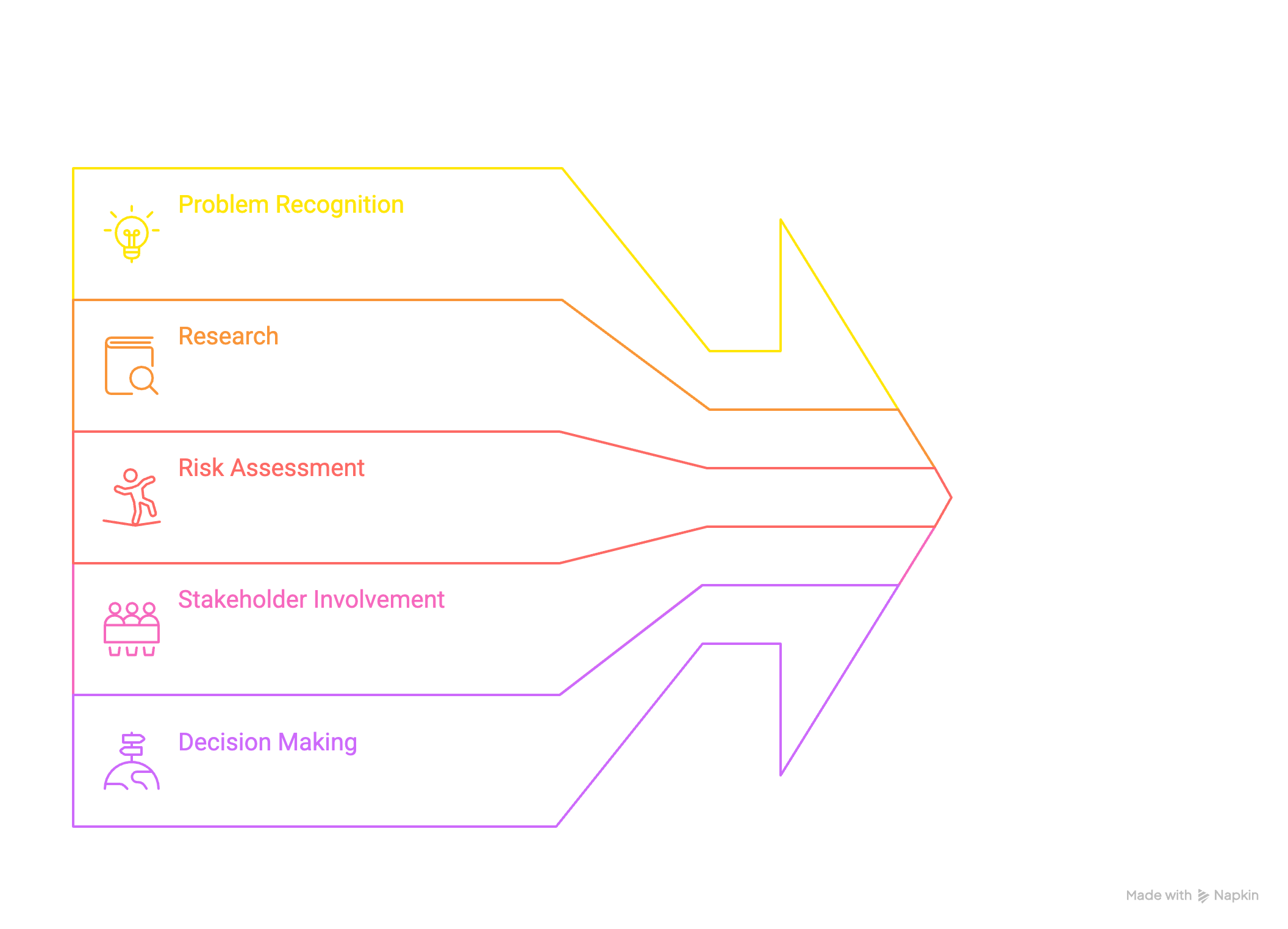
Buyer behavior is the pattern behind how somebody in a company notices a problem, starts looking, gets nervous about risk, pulls in other people, and finally decides to buy or not buy. If your GTM process feels harder than it should, buyer behavior is often the missing piece, because most sales and marketing problems start when your process doesn’t match how buyers actually make decisions.
What Buyer Behavior Actually Means
Buyer behavior sounds abstract, but it’s not. In B2B SaaS, it simply means the actions and signals that show how a potential customer moves from “something feels off” to “yes, let’s do this” or “not now.”
That includes the obvious moments, like booking a demo or asking for pricing. But it also includes quieter moments that shape the deal long before a call happens: searching for a fix after a messy Monday reporting fire drill, forwarding your site to a manager, comparing your pricing to the cost of hiring one more ops person, or stalling because nobody wants to own a risky tool change.
Here’s the thing: buyer behavior is not just “why people buy.” That definition is too soft to be useful. For a GTM team, buyer behavior is the practical sequence of noticing, researching, comparing, doubting, aligning, and deciding. Once you look at it that way, your funnel starts to make more sense.
Think of it like watching footprints instead of reading a mission statement. Buyers say all sorts of things. Behavior shows what actually moves a deal.
Why Buyer Behavior Changes Your GTM Process
Your GTM process is supposed to make buying easier. Positioning should help buyers recognize the problem. Messaging should reflect the words already in your buyer’s head. Outbound should show up at the right moment. Demos should reduce uncertainty. Pricing should feel legible, not confusing. Follow-up should help buyers get internal buy-in, not just keep the thread alive.
When those pieces don’t work, the easy assumption is that your team needs to try harder. More emails. More calls. More content. More pipeline reviews.
That’s usually the wrong diagnosis.
Bad GTM usually comes from misreading buyer behavior, not from a lack of effort. If buyers only start caring when a new hire inherits a broken process, but your homepage talks mostly about AI features, you’ve got a mismatch. If prospects need internal proof to move forward, but your follow-up email says “just checking in,” you’ve got another one. If your trial drops off because setup feels like work before value shows up, that’s buyer behavior too.
At the $1M to $5M ARR stage, this matters even more. You don’t have room for a bloated motion. Every call, page, and sales asset has to pull its weight.
GTM problems that are really buyer behavior problems
Low reply rates often mean your outbound is landing before the pain is active, or it describes the wrong problem. Stalled deals usually mean a prospect is interested but not confident enough to carry the decision internally. Weak demos often happen when the walkthrough follows product navigation instead of the buyer’s decision logic.
“Not a priority” is another classic. Sometimes that objection really means there’s no pain. More often, it means the pain exists but hasn’t collided with a deadline, a target miss, or enough organizational embarrassment to force action.
Poor trial conversion can tell the same story. If somebody signs up, pokes around, and disappears, the product may not be the issue. The real problem may be that the buyer wanted reassurance, clarity, or a fast path to a visible win, and your motion handed over an empty workspace and a setup checklist.
Once you start tracing these issues back to buyer behavior, the fix gets more concrete.
The Core Parts of Buyer Behavior in B2B SaaS
Buyer behavior becomes useful when you break it into pieces you can actually observe.
Need recognition
Every purchase starts with a moment, or a slow build, where something stops feeling acceptable. Maybe reporting takes three tools and two spreadsheets. Maybe a new sales hire exposes how messy the CRM setup really is. Maybe customer onboarding depends on one operations manager who remembers every workaround by heart.
That moment is need recognition. The buyer sees a problem as real enough to spend energy on.
Trigger events matter here. Hiring is a big one. So is missing a target, dealing with tool sprawl, preparing for a board update, or hitting a process that breaks every Monday morning in the same spreadsheet tab. Pain becomes actionable when it’s tied to friction, delay, risk, or public visibility.
If your messaging doesn’t match that trigger, you’ll sound early or irrelevant.
Information search
Once the problem feels real, buyers start gathering options. Not always in a neat sequence, and not always with a demo request first. Sometimes it starts with a Slack message to a peer. Sometimes it’s a Google search, a quick skim of G2, a visit to your pricing page, or a reply to an outbound email that finally feels timely.
At this stage, buyers are usually trying to answer basic but loaded questions. What is this category? Is there a tool built for this exact mess? How hard is setup? Will this replace something or add one more layer? Is this worth bringing up internally?
Those questions are not random. They tell you what your site, outbound, and early sales motion need to do. Early-stage buyers need orientation and relevance, not a full product dump.
Evaluation of alternatives
This is where most teams oversimplify the market. Buyers are not just comparing your product to direct competitors. In early and mid-market SaaS, the real alternatives are often uglier and more stubborn: spreadsheets, cobbled-together workflows, an internal build, a virtual assistant, a “good enough for now” tool, or simple delay.
That matters because your deal story changes depending on the alternative. If the real competition is a spreadsheet, your job is not just feature comparison. Your job is to show why staying manual creates hidden cost, fragility, or slowdowns. If the alternative is another vendor, your job may be differentiation. If the alternative is doing nothing, your job is urgency.
A buyer comparing alternatives is really comparing tradeoffs. Better workflow, but more change. More automation, but setup time. Cleaner reporting, but another line item. Your GTM motion works when it makes those tradeoffs easier to understand.
Purchase decision
Deals move forward when enough confidence piles up around one choice. Not hype. Confidence.
That confidence usually comes from a few things working together: urgency strong enough to act now, pricing clear enough to defend internally, implementation manageable enough to not feel like a side project, and risk reduced enough that saying yes feels safer than waiting.
Even in smaller companies, there are often procurement-lite steps. Somebody wants the contract skimmed. Somebody asks about security. Somebody checks whether monthly billing is possible. Somebody else wants to know who will own setup. None of that is bureaucracy for the sake of it. It’s buyer behavior expressing caution.
If your sales process only pushes for close dates and ignores these confidence-building steps, deals drift.
Post-purchase evaluation
Buyer behavior doesn’t stop at signature. It keeps going through onboarding, adoption, early results, and renewal.
This part gets ignored all the time, which is a mistake. The first two weeks after purchase often determine whether the customer feels smart or uneasy. If setup is clean, value shows up fast, and the team can point to one visible win, the decision gets reinforced. If the account goes quiet, usage stays shallow, or handoff feels clumsy, doubt creeps in.
Post-purchase behavior shapes referrals, expansion, retention, and even future positioning. The phrases customers use after 30 days often tell you more about your real value than the headline on your homepage.
The Main Types of Buyer Behavior You’ll See
The old consumer behavior categories still help, as long as you translate them into B2B SaaS reality.
Complex buying behavior
This shows up when the purchase is expensive, risky, or changes a core workflow. Multiple stakeholders care. Evaluation takes longer. Proof matters more than promises.
If you sell into finance operations, security workflows, customer support systems, or anything that touches several teams, this is common. Buyers need strong content, specific demos, implementation clarity, and evidence that the tool works in environments like theirs.
In this motion, generic claims fall flat. Buyers want to see the map before taking the trip.
Dissonance-reducing buying behavior
Sometimes a buyer knows a purchase is needed, but the options look annoyingly similar. That’s where anxiety kicks in. The worry is less “should anything be bought?” and more “what if the wrong option gets picked?”
This type of buyer behavior shows up in crowded SaaS categories. Email tools, analytics layers, meeting software, proposal tools, plenty of them look close enough on the surface to create hesitation.
Reassurance becomes the job. Customer proof, transparent onboarding, responsive answers, and a sense that switching won’t become a six-week headache all matter here. The buyer isn’t just choosing features. The buyer is trying to avoid regret.
Habitual buying behavior
Some B2B purchases are surprisingly low drama. The category feels familiar, risk seems contained, and the path of least resistance wins.
That can happen with lightweight team tools, repeat purchases inside a known category, or add-ons that fit an established motion. Buyers often default to what feels easiest to explain and quickest to activate.
If this is your category, fancy persuasion matters less than clear packaging, consistent messaging, and a fast time to first value. Friction kills these deals more than weak differentiation.
Variety-seeking behavior
Sometimes a buyer wants something new even if the current setup isn’t a disaster. Maybe the existing tool feels cluttered. Maybe support is slow. Maybe pricing expanded while product fit didn’t. Maybe a cleaner experience simply looks more appealing.
This is where challenger messaging works well. Not aggressive noise, just a clear contrast. Better fit for a specific team. Easier setup. Fewer clicks. Less bloat. More flexibility.
Buyers in this mode are open to change, but only if the change feels refreshing rather than disruptive.
What Shapes Buyer Behavior in a B2B Sale
Buyer behavior looks rational from a distance. Up close, it’s a mix of business pressure, personal risk, internal politics, and timing.
Business pain, urgency, and timing
Pain alone does not create a deal. Plenty of teams live with painful systems for months. Sometimes years.
A buying process usually starts when pain meets timing. A missed goal, a new manager, an upcoming renewal, a board meeting, a broken workflow, a hiring ramp, something turns a known annoyance into an immediate problem. That collision is what changes browsing into action.
If you want better GTM performance, pay attention to timing triggers as much as pain points.
Perceived risk
Perceived risk often matters more than feature gaps. Buyers worry about switching costs, implementation effort, wasted time, adoption problems, and ending up with a tool that creates one more system to manage.
That fear is especially strong in smaller teams where every tool change lands on a few overloaded people. A feature can be attractive. A messy rollout can still kill the deal.
This is why onboarding details, migration help, setup support, and plain answers about effort matter so much. You are not just selling capability. You are lowering the emotional cost of saying yes.
Stakeholders and internal politics
In B2B SaaS, one person rarely carries the full decision. A user may want speed. A manager may want visibility. Finance may want predictability. A founder may want fewer tools and less complexity.
Stakeholder alignment simply means enough of those concerns get answered for the deal to move. If your champion likes the product but can’t explain the value to anybody else, the deal goes single-threaded and stalls.
This is where sales materials need to travel well. A screenshot, short deck, pricing note, implementation plan, or case study that can be forwarded internally does real work.
Budget reality
Budget conversations are almost never just about budget. Buyers think about price relative to headcount, existing tools, ROI, alternatives, and how easy the purchase is to justify.
“No budget” often means “not enough confidence yet.” If the pain is expensive enough and the path feels safe enough, budget can appear. Not always, but often enough that it’s worth treating budget as a decision signal, not just a hard wall.
The catch is that vague pricing makes this worse. Unclear cost creates drag because buyers can’t do internal math.
Trust signals
Trust gets built through lots of small cues. Case studies. Peer referrals. Transparent pricing. Clear onboarding. A clean product. A site that answers real questions instead of hiding behind slogans.
Even tiny details shape momentum. If a prospect visits your integrations page twice, checks your security answers, and sees a crisp implementation outline, confidence grows. If pricing is hidden, setup is mysterious, and proof feels generic, confidence drops.
Trust is not a brand exercise here. It is buying friction, either removed or left in place.
Buyer Behavior Across the GTM Funnel
The funnel becomes more useful when each stage reflects buyer behavior instead of internal pipeline labels.
Awareness: how buyers first notice you
Awareness starts when your name enters the picture through search, referrals, communities, LinkedIn, outbound, partners, or dark social. That first touch does not need to do everything. It just needs to feel relevant.
At this stage, buyers are not asking for the complete pitch. They’re asking, often silently, “is this related to the problem I have right now?” If the answer is yes, attention continues. If not, you lose the moment.
That’s why useful specificity beats broad value props early on.
Consideration: how buyers narrow options
Consideration is where buyers sort signal from noise. This is the middle of the funnel, where use cases, proof, objections, and fit matter far more than vague category language.
Buyers are looking for signs that your product fits the shape of the problem, the size of the team, and the reality of the workflow. Not just “can this do it?” but “will this work here?”
That distinction changes your content and sales approach. Feature lists help less than believable before-and-after stories.
Decision: how buyers get comfortable enough to act
The close usually happens before the signature. By the time a contract is sent, the real work should already be done.
Decision-stage buyer behavior includes internal sharing, approvals, security questions, pricing reviews, implementation concerns, and final checks that the tool won’t become a burden. The buyer is trying to get comfortable enough to act without feeling reckless.
If you want faster closes, build confidence earlier.
How to Spot Buyer Behavior in Real Life
You do not need a giant research budget to understand this. You need attention, a simple system, and the discipline to notice patterns.
What to look for in sales calls and demos
Listen for repeated phrases. “We’re doing this manually.” “My team won’t adopt another tool.” “I need something I can show my founder.” Those lines matter because they reveal triggers, risks, and internal dynamics.
Notice energy shifts too. When a prospect leans in during workflow setup but goes flat during reporting, that means something. When stakeholder names appear late in the process, that means something too.
Turn call notes into tags, not anecdotes. Trigger. Objection. Stakeholder. Risk. Next step. After ten or fifteen calls, patterns start showing up in plain sight.
What to look for in product and website behavior
Behavioral analytics just means watching what people actually do. Which pages get revisited. Where trial setup stalls. Which integrations get clicked. How often pricing gets checked. Whether usage clusters around one feature and ignores the rest.
If somebody visits pricing three times, reads the security page, and spends four minutes on integrations, that’s buyer behavior. If trial users create an account but never complete the setup step that leads to first value, that’s buyer behavior too.
Product and site behavior help you see intent without waiting for somebody to say it out loud.
What to look for in win-loss patterns
Wins and losses often tell the truth more clearly than surveys. Closed-lost notes, churn reasons, onboarding friction, and expansion stories all reveal what buyers valued, feared, and struggled to justify.
The trick is separating recurring patterns from random noise. One lost deal over a missing feature may not matter. Five losses where the champion couldn’t get finance approval, or couldn’t explain implementation effort, definitely matter.
That’s where your best GTM adjustments usually come from.
Survey Data vs. Behavioral Data
This topic gets framed like a competition, but it isn’t. You need both.
What surveys and interviews are good for
Surveys and interviews are good for learning motivation, language, objections, and buying context. They help you understand how buyers describe the problem, what alternatives felt acceptable, and what internal pressure made the search start.
The useful answers come from specifics. Ask about the last time a tool was evaluated, what happened right before the search, who got involved, what almost blocked the decision. Concrete questions beat broad opinion prompts every time.
What behavioral data is good for
Behavioral data shows observed actions: page visits, email engagement, trial behavior, demo conversion, follow-up response, and pipeline movement. It helps validate, challenge, or sharpen what buyers say.
If prospects claim integrations are the top issue but keep revisiting pricing and security pages, your message is off. If a segment says setup speed matters and trial data shows high drop-off before activation, that’s your bottleneck.
Words tell you the story buyers remember. Behavior shows the story they live.
The trick is to use both together
Used together, these inputs get much more powerful. Interviews tell you what buyers think matters. Behavioral data shows what keeps pulling attention. The gap between those two is often where your GTM process needs work most.
A buyer may say, “feature depth mattered most.” Then spend half the deal asking who owns onboarding, how long migration takes, and whether monthly billing is available. That does not mean the buyer lied. It means buying decisions are layered, and your process has to match the full picture.
How Buyer Behavior Should Change Your Messaging and Sales Motion
Insight is only useful if it changes what you do next.
Adjust your positioning around the real trigger
Positioning should center the problem that starts the buying process, not the feature you are proudest of. If buyers start searching after reporting breaks, lead with reporting pain. If the trigger is tool sprawl after hiring a new ops lead, say that plainly.
This sounds obvious, but plenty of SaaS sites miss it. They open with category claims while buyers are still trying to name the mess in front of them.
Meet the trigger first. Everything gets easier after that.
Build demos around decision-making, not feature tours
A good demo helps a buyer answer one question fast: will this work here?
That means showing the workflow, setup logic, implementation reality, and the path to first value. Not clicking through every tab like a museum guide. Generic feature tours create polite interest and weak momentum. Decision-focused demos reduce uncertainty.
If buyers usually worry about rollout, address rollout early. If buyers need internal proof, give them a clear before-and-after story they can repeat.
Change follow-up based on buyer stage
Early-stage buyers need clarity and relevance. Late-stage buyers need proof, implementation detail, and internal-shareable material.
A follow-up after a first call might include a tight recap of the problem, a short use case, and one reason the product fits. A later-stage follow-up should help the deal travel inside the account: pricing explanation, rollout steps, security answers, customer proof, and a simple recommendation for the next decision.
Same buyer, different stage, different need.
Give the first sales hire a buyer behavior playbook
If you are hiring your first rep, do not hand over only a pitch and a CRM login. Give a simple buyer behavior playbook: top triggers, common objections, typical stakeholders, risk concerns, proof points, and a clean next-step framework.
For a lean SaaS team, this matters a lot. Founder instinct can carry early deals because context lives in your head. A new rep needs the pattern written down. Otherwise, the motion gets noisy fast.
Keep it simple, practical, and tied to real calls.
Common Mistakes GTM Teams Make With Buyer Behavior
A few mistakes show up again and again.
Confusing ICP with buyer behavior
Knowing the company type is useful. It is not enough. Industry, headcount, funding, and team size tell you who might buy. They do not tell you how the purchase happens.
Two companies with the same ICP can behave very differently. One buys after a messy onboarding handoff. Another buys during annual planning. Same category, different motion.
Overvaluing stated preferences
Prospects often describe an ideal version of the purchase, not the real one. In interviews, somebody may talk about advanced functionality. In the live deal, speed, trust, and ease of rollout decide everything.
That gap is normal. If you only listen to stated preferences, you will build messaging for aspiration instead of action.
Treating every buyer the same
Founder-led sales often works by feel at first. You notice cues, adapt your pitch, and make the conversation fit the account. Then the first rep arrives, gets one script, and suddenly the motion feels flat.
Not every buyer needs the same story, proof, or next step. Some need urgency. Some need reassurance. Some need a path they can forward to finance in five minutes.
Sameness is easy. It also kills deals.
Ignoring the “do nothing” option
In B2B SaaS, inertia is often the strongest competitor. Not another startup. Not the legacy vendor. Just delay.
If your messaging only compares you to other tools, you miss the buyer’s real default, which is keeping the current mess alive a little longer. Your job is to make the cost of inaction visible and the path to change feel manageable.
A Simple Way to Start Using Buyer Behavior This Quarter
You do not need a full research project to make this useful. Start small and make it real.
Step 1: pick one segment and one buying motion
Choose one narrow slice of your market and one motion inside it. Maybe RevOps teams at VC-backed SaaS companies. Maybe bootstrapped agencies replacing spreadsheet-heavy reporting.
Narrowing the frame helps because patterns become easier to see. If you mix every segment together, the signal gets muddy fast.
Step 2: review recent calls, wins, and losses
Pull a small sample from the last 60 to 90 days. Tag each one for trigger, objection, stakeholder, perceived risk, and reason the deal moved or stalled.
Do this in one sitting if possible, even if it’s a Tuesday afternoon with coffee going cold next to your laptop. The point is not perfect research. The point is pattern recognition.
Step 3: update one GTM asset
Pick one thing to change based on what you noticed. Your homepage hero. An outbound sequence. A demo deck. A pricing FAQ. One asset is enough.
This keeps the work grounded. Insight should leave a mark somewhere buyers can actually feel.
Step 4: try one change for 30 days
Run the change for a month and watch what happens. Do reply rates improve? Do demos get more engaged? Do fewer deals stall on implementation questions? Do more trial users reach first value?
Then refine. That’s the trick. Buyer behavior is not a one-time document. It is a habit of paying attention and updating your motion before assumptions harden into process.
If you try one thing this quarter, make it this: stop guessing why deals move, and start matching your GTM process to what buyers are already showing you.


Discussion