

Your calendar is packed, demos are happening, prospects sound interested, and still the deals keep sliding out of reach. That pattern sits at the heart of a lot of common sales mistakes: not a lack of effort, but a few repeat habits that quietly weaken trust, pricing, and pipeline. If you’re still selling yourself or getting ready to hire your first rep, these are the fixes worth making first.
1. Waiting Too Long to Sell Because the Product “Isn’t Ready Yet”
This one feels responsible. You want a cleaner onboarding flow, a tighter dashboard, one more integration. So you stay in product mode and tell yourself sales can start once things look polished.
Here’s the thing: “not ready” often means “not ready to hear the market’s opinion.” Early conversations teach you where your message is fuzzy, which pain is real, and what buyers actually care about. Another sprint rarely gives you that. In fact, early customer conversations usually save you from building the wrong thing with more confidence.
Selling before perfect is not sloppy. It’s how you sharpen positioning in the real world, where buyers interrupt, push back, and explain the problem in language you would never invent in a Notion doc.
2. Pitching Too Early Instead of Running a Real Discovery
A lot of founder calls go like this: quick intro, brief company story, then straight into the demo. It feels efficient. It usually isn’t.
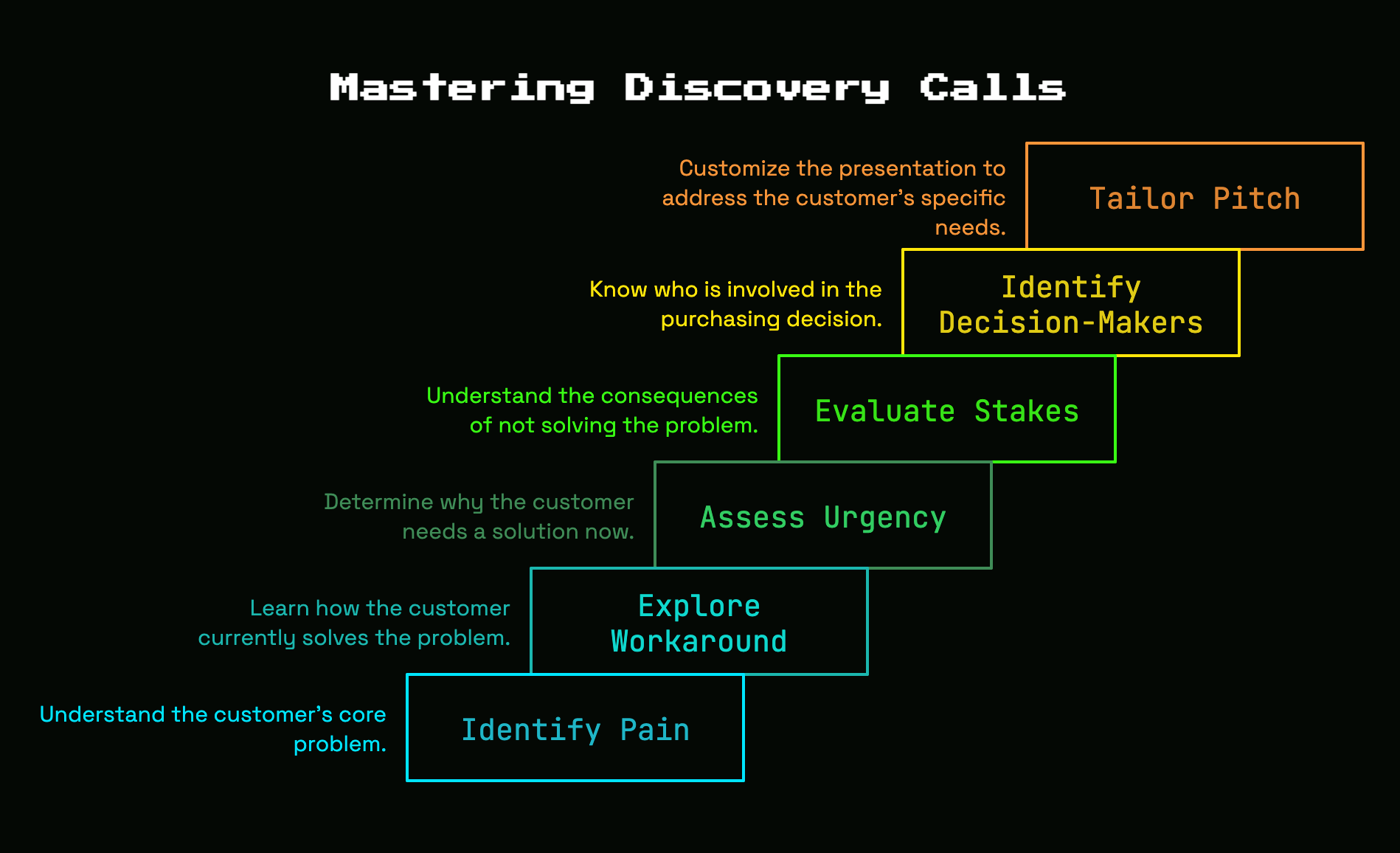
A real discovery means learning what is broken, why it matters, what the current workaround looks like, and what happens if nothing changes. If you skip that, your pitch lands like a generic tour. Buyers feel managed instead of understood, which is exactly why sending materials too early tends to backfire.
A fast pitch is usually a slow deal. You save five minutes up front and lose three weeks later when nobody feels enough urgency to move.
What to learn before you show the product
Before opening the demo, get clear on five things: the pain, the workaround, the urgency, the stakes, and who else is involved. In plain English, you’re trying to learn what’s annoying, what it’s costing, why now matters, and how decisions get made.
That one shift changes the whole call. Instead of showing every feature, you can show only the parts that connect to the problem sitting on the table.
3. Talking Too Much and Missing What the Buyer Is Actually Telling You
You know the product inside out, so of course you want to explain it well. The catch is that too much explaining makes you deaf.
A strong sales conversation usually leans hard toward listening. One founder sales rule that holds up well is the 80/20 balance: far more listening than talking. Not because silence is magical, but because buyers tell you how to sell if you stop filling every gap.
Pay attention to the words that get repeated. Notice what gets brushed past quickly. If somebody keeps saying “manual,” “fragile,” or “nobody trusts the numbers,” that matters more than your prepared feature list. The trick is not sounding smart. It’s hearing the real buying motive hiding inside casual language.
4. Leading With Features When the Buyer Needs Outcomes
Most B2B buyers can scan your site, docs, or release notes on your own. If you spend the call reciting features, you’re giving information that was already available without the meeting.
Buyers care about what changes after adoption. Saved time. Less risk. Faster approvals. Better visibility. Shorter handoffs. Think of it like fixing a shelf in a hallway closet. Nobody wants a lecture about the toolbox. You just want the shelf to stop sagging.
Feature-heavy selling also creates a subtle pricing problem. If the conversation stays at the level of buttons and workflows, your product starts to feel interchangeable.
A simple swap founders can make
Swap “here’s what it does” for “here’s what changes for your team.” Instead of saying your platform has automated routing, say support requests stop bouncing between inboxes and get assigned correctly on day one. Instead of saying you have role-based reporting, say finance and ops can finally look at the same numbers without exporting three CSVs.
That translation sounds small. It is not. It turns your product from software into a business result.
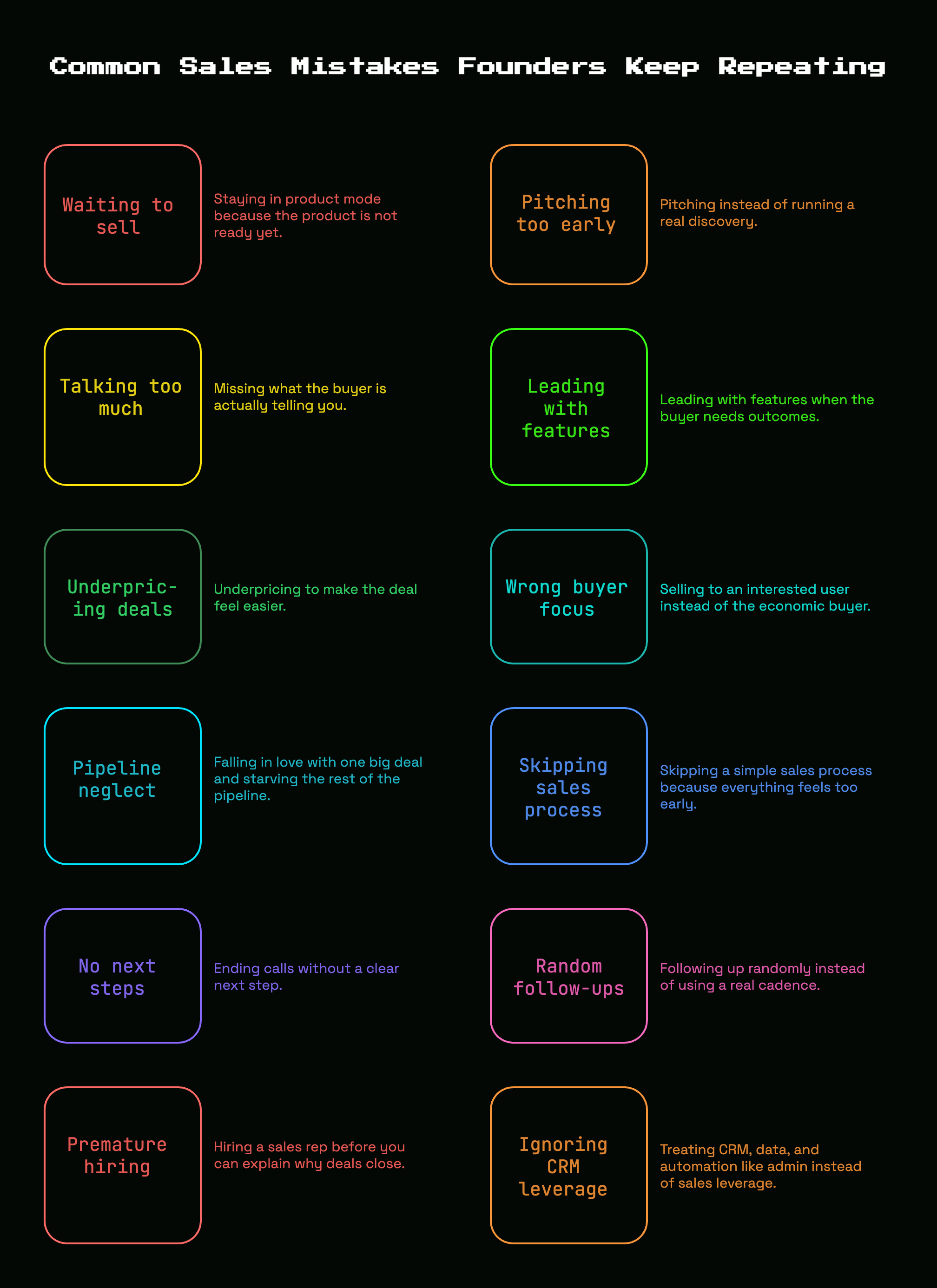
5. Underpricing to Make the Deal Feel Easier
Early pricing feels personal. A higher number can feel like a test of your confidence, so you lower it to keep the conversation moving.
But low pricing often makes the deal harder, not easier. It can weaken trust, attract bad-fit customers, and stop you from learning what your product is truly worth. In early B2B SaaS, charging $1,000 to $2,000 a month is often too low to match the value you’re promising.
The better rule is simple: price at a level that scares you a little. Not because swagger closes deals, but because price should reflect the cost of the problem. If the value is not there yet, use a design-partner setup and ask for feedback, references, or a case study in return. Don’t quietly discount your way into weak signal.
6. Selling to an Interested User Instead of the Economic Buyer
This mistake wastes months.
An end user can love your product, champion it internally, and still have no power to get budget approved. Then the call ends with, “This looks great, let me circle back internally,” and your deal goes into the familiar fog.
You need to find the person who can actually say yes. That doesn’t mean ignoring users. It means separating enthusiasm from authority early, before you build a forecast on good vibes.
Questions that reveal who can say yes
Ask how budget gets approved. Ask which team owns the problem. Ask who feels the cost of doing nothing. Ask who else needs to weigh in before a purchase moves forward. Those questions sound basic, but they expose whether you’re talking to a fan or to the financer.
That matters even more now, because many B2B deals involve a wider group than founders expect. If finance, security, or procurement shows up late, a healthy deal can suddenly stall.
7. Falling in Love With One Big Deal and Starving the Rest of the Pipeline
Every founder has had that one account. Big logo. Great meetings. Lots of internal excitement. Slack starts treating it like a near win before anything is signed.
That’s dangerous. When too much hope sits on one deal, you start interpreting weak signals as progress. You discount faster, wait longer, and neglect the rest of the pipeline. For a bootstrapped team, that can distort cash planning in a hurry.
The better move is to keep multiple conversations running in parallel. Macy Mills makes this point well with parallel conversations, especially in design-partner sales. One prospect saying no is normal. One prospect going quiet is not a strategy problem unless it’s your only shot.
8. Skipping a Simple Sales Process Because Everything Feels “Too Early”
Early stage does not mean process-free. It just means the process should be simple.
A sales process is the set of repeatable stages a deal moves through, with a clear reason for moving forward. That’s it. Not a giant handbook. Not ten pipeline columns nobody understands. Just a shared path from first conversation to closed deal.
This matters more than most founders expect. Companies with 18% higher revenue growth often have one thing in common: a defined sales process. Structure helps you spot where deals stall and why.
Keep the process lightweight
Keep it to three to seven stages. Make each stage mean something observable, like “pain confirmed,” “economic buyer identified,” or “security review started.” Clear stage exits matter more than fancy naming.
That kind of lightweight process is also what your first rep needs. If your CRM stages read like vibes, your rep will guess. Guessing is not a system.
9. Ending Calls Without a Clear Next Step
A good call can still produce a bad outcome if it ends vaguely.
“Keep me posted” is not a next step. “Let’s stay in touch” is not a next step either. Deals drift when nobody owns the next action, no date is set, and no one knows what has to happen before a decision.
Before the call ends, get specific. Book the technical review. Set the follow-up with finance. Put the decision meeting on the calendar. Even a simple “you’ll send security docs by Thursday, then review internally on Monday” is better than polite fog.
10. Following Up Randomly Instead of Using a Real Cadence
A lot of deals are lost to inconsistency, not rejection. One thoughtful follow-up email feels professional. Then five business days turn into twelve, and the thread cools off for no good reason.
Most sales need more persistence than founders expect. Some research says 80% of sales require five follow-up calls after the meeting. That doesn’t mean pestering people. It means building a respectful cadence so your deal does not die from neglect.
What good follow-up sounds like
Good follow-up is short, useful, and tied to something the buyer already cares about. Send the ROI breakdown you promised. Share the security answer that came up on the call. Point to a customer example that matches the workflow problem discussed.
“Just checking in” adds work to somebody’s inbox. A relevant nudge reduces friction.
11. Hiring a Sales Rep Before You Can Explain Why Deals Close
At $1M to $5M ARR, this temptation gets strong. You’re busy, pipeline needs help, and hiring a rep feels like the adult move.
But your first rep cannot fix mystery. If you can’t clearly explain your ideal customer, the objections that come up, why buyers choose you, and what a healthy deal looks like, your rep is walking into a maze. Founder-led sales matters because it forces those patterns into the open.
A rep without a playbook does not create scale. A rep without a playbook just creates more expensive confusion.
What to lock down before the first hire
Document the basics: ideal customer profile, common objections, sales stages, pricing logic, demo flow, and handoff points. Nothing fancy. Just clear enough that somebody else can run the motion without needing your brain on every call.
If the playbook only exists in scattered call memories and voice notes from Tuesday at 6:40 p.m., you’re not ready to hand it off yet.
12. Treating CRM, Data, and Automation Like Admin Instead of Sales Leverage
CRM hygiene feels boring until you need a forecast, a handoff, or a follow-up history and realize half the deal is missing. Then it gets expensive.
Bad notes, fuzzy stages, and incomplete data create low visibility, and weak visibility leads to bad decisions. That problem shows up across sales teams. In one 2026 survey, missing or incorrect data ranked near the top of internal sales challenges, right alongside process and technology gaps.
Use automation after the basics are clear
Automation helps most after your fundamentals work manually. Start small: follow-up reminders, stage-based tasks, call notes, and next-best-action prompts. High-performing sales teams are almost twice as likely to automate their process, but automation is a multiplier, not a rescue plan.
If your stages are messy and your notes are thin, AI will just help you make faster mistakes. If your process is clear, automation gives you time back and keeps deals moving.
The Fix That Changes the Rest
These mistakes keep repeating because each one feels harmless in the moment. One more sprint before selling. One cheap deal to get in the door. One vague ending to an otherwise solid call. Stack enough of those together and your sales motion starts leaking from every side.
Try one thing this week: pick the mistake showing up most often in your deals and fix that first. Clean up your discovery, raise your price, tighten your follow-up, or define your stages. One good correction can make the whole conversation feel simpler, sharper, and much easier to trust.


Discussion